The four editing tasks
The four things an owner actually does. Each one is the whole job, in order, with the screen on the left and the field on the right. The same four are inside your site at Settings › Site details › Guide.
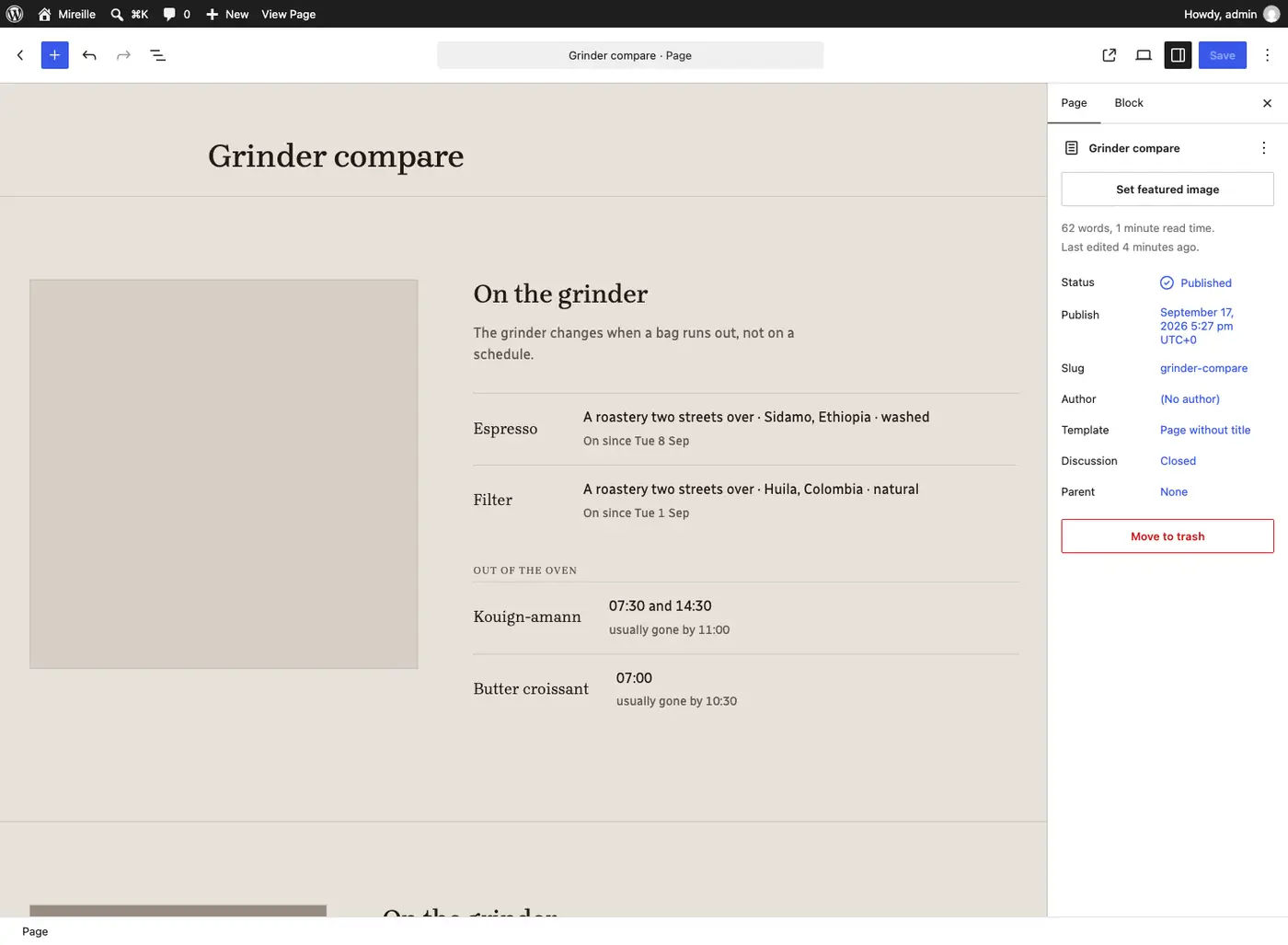
1. Update a dish
Its name, the line under it, its diet marks and which services it is on.
| What you do | Where |
|---|---|
| Open the dish. | Dishes › the dish |
| The title is the name; the excerpt is the line under it. | Title · Excerpt |
| Set the letters and the services it is served at. | Dish details › Dietary, Dayparts |
| Pick the division it prints under. | Sections |
| Update. The footer's freshness stamp moves on its own. | Update |
Dietary marks are V vegetarian, VG vegan, GF gluten-free, DF dairy-free — and N, which
means contains nuts. N is an allergen warning, not a diet, so it is never a filter button and
never appears in structured data as something to recommend.
2. Change a price, or change it for today only
For good, or for one service only, without touching the printed card.
| What you do | Where |
|---|---|
For good: open the dish and set the price in the site's currency: 17, or 4.25 when there are cents. It is stored as cents and prints as $17 or $4.25. |
Dishes › the dish › Dish details › Price |
| Add-ons carry their own price, in the same panel. | Dish details › Add-ons |
| For today only: post a slip instead and leave the dish alone. | Slips › Add new › Kind: Instead |
| Put today's price on the slip's line and close its window. | Lines · Valid from · Valid to |
| When the window closes the row is the truth again. Nothing was deleted. | Slips |
Whole amounts lose the cents: a printed card writes 17, not 17.00. The currency symbol, its side
and the decimal separator are one site fact you state once.
3. Replace an image, and keep its crop
A new plate, and the point in it the crop has to keep.
| What you do | Where |
|---|---|
| Set the dish's photograph. | Dishes › the dish › Featured image |
| Drag the crop point onto the food, so the 96px thumbnail keeps it. | Dish details › Focal point |
| A service's counter photograph is set with the service, not with a dish. | Services › the service › Photograph |
| The grinder's square plate is chosen with Choose image, then two focal-point numbers. | Settings › Site details › This café › Coffee |
Watch for: a counter photograph carries white type with no scrim behind it. Replace one with a lighter plate and the words over it can stop being legible. Nothing checks this for you: look at the home page at 375 and at 1440 before you publish.
Why no scrim: a dark wash over a photograph to make type readable is a way of shipping a photograph that does not work. Every counter plate in the demo was measured at the point the words land and re-cropped until it passed. Yours has to be too — by eye, at both widths.
4. Point a visitor at a reservation
Which services take a booking, and where the button sends them.
| What you do | Where |
|---|---|
| Set the mode, and the page it sends people to. | Settings › Site details › Booking › Mode, URL |
| Set where one table ends and a group enquiry begins. | Booking › Party max, Group min, Group email |
| Mark which services take a booking at all. | Services › the service › Bookable |
| The header's own action is a Button block in the header part. | Site Editor › Patterns › Template parts › Header |
| To stop taking bookings for one service today, post a Booking slip. None of the above changes. | Slips › Add new › Kind: Booking |
Watch for: the site never shows live availability and never confirms a table. Setting the booking mode to provider mounts a third-party loader, which is a script, which sets cookies — and the sentence on your notices page saying there is nothing to consent to stops being true that day.
See Booking, orders and enquiries for what each of the three modes renders.