
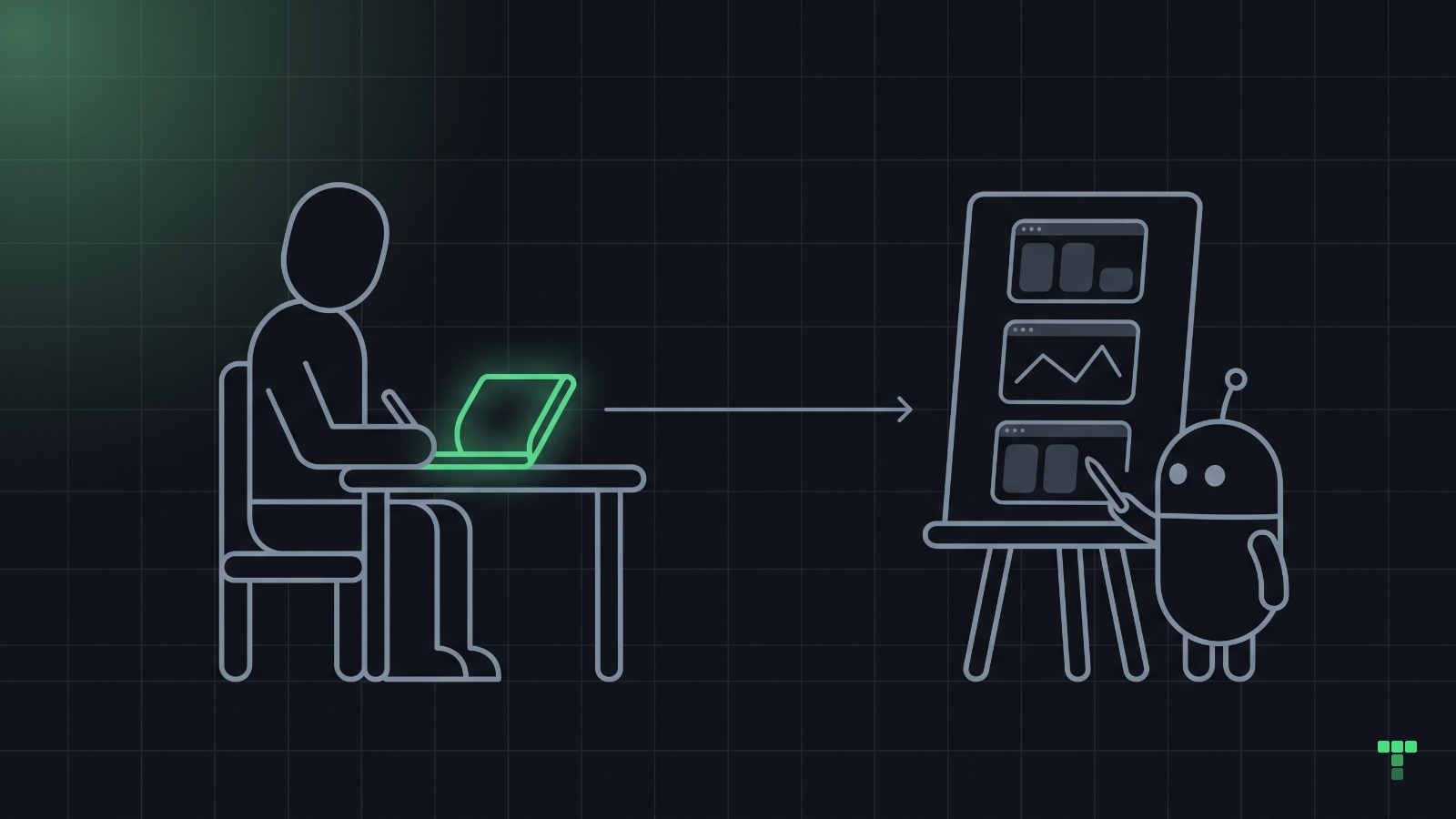
The screen is no longer the designer's deliverable. The contract the generator works under is. Three sources that never met converged on this shape in 2026: Anthropic's Claude Design builds a design system before it draws a frame, Anthropic's most-installed design skill demands a plan and a critique before code, and the pass files behind our own catalog say the same thing in numbers.
What changed in the designer's output?
Generation got cheap and judgment did not. A designer who once spent the week producing screens now spends it deciding which of forty generated screens is right, and why. Figma's State of the Designer 2026 (906 designers) has 89% saying they work faster with AI and 91% saying it improves their designs, which is the same finding seen from the other side: the production hours moved somewhere else.
Where they moved is to the words written before the first screen exists. Each of these tools asks for that document up front:
- Claude Design reads your codebase and design files at onboarding and builds a design system first; every project after that uses your colours, type and components, and the output is a handoff bundle of tokens and component specs for Claude Code, not a picture.
- Anthropic's
frontend-designskill opens with the subject, the audience and the page's single job, then a design plan (four to six named colours, the type roles, an ASCII wireframe, one signature element) and a critique pass asking whether any element "feels like a default choice for any similar project" before a line of CSS. - Our design pass opens with a frame: intent, non-goals, one signature a buyer could describe from memory, and the one house rule the theme breaks on purpose, all written before markup.
The same survey has a tension worth keeping in view. Asked what craft means, 58% of designers said visual polish and 15% said consistency across products. Consistency is the thing a generator breaks first, and the document above is the only place it gets defended.
Check your own design rules
Write down every rule your team applies to generated UI. Then ask which ones exist as words an agent could read before it starts, and which ones exist only as a reviewer's reaction after. The second list is the work you are still doing by hand.
What does the contract contain?
Not a style guide. A style guide describes the look; a contract says what blocks shipping, what is a default, and why each rule exists. Ours binds every rule as one of three kinds (the pattern comes from /design-pass, the skill that governs all visual work here):
- Floors are checked by a machine wherever a gate exists and block shipping with no way to declare out: contrast computed for every pair, a focus ring on everything, reduced motion that never breaks layout, no invented numbers.
- Defaults are the house choice, followed silently; deviating is designing, and it is allowed on one condition, a declared sentence in the pass file saying what you are doing instead and what it buys.
- Precedents are the incident behind each rule, kept in a dated ledger (eighteen so far) so a rule can be cited rather than re-argued, and extended when a new incident produces a new rule.
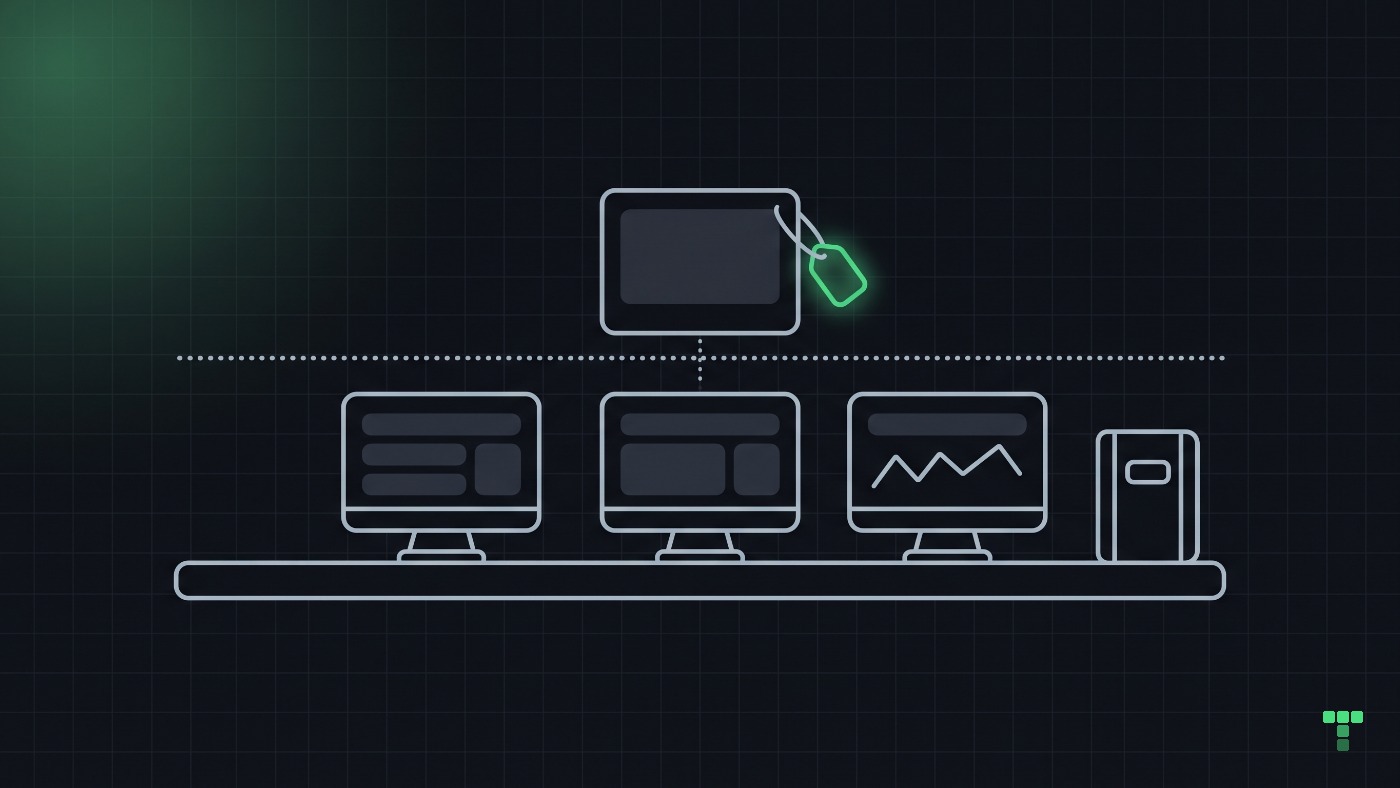
The middle tier is what keeps a contract from producing a template. Quotas cleared mechanically converge: four of our themes once shipped one headline cadence, three shipped the same hero. A pass file with zero declared deviations on a theme build is itself a reason for a reviewer's suspicion.
This is an older idea than the tooling. Christopher Alexander's A Pattern Language (1977) wrote each pattern as a problem, its context and a solution, phrased so a builder the author never met could apply it. The designer's job has become writing the pattern language the agent applies.
check your own project
Sort your own rules into the three kinds. A rule you cannot place is a preference, and an agent will treat it as one.
How do you design fast with it?
By writing more before and reviewing less after. We can show that from our own pass files, the document each theme build keeps as it goes. Between 14 and 20 August the words written before and around a build went from about two thousand to between thirteen and twenty thousand, the computed contrast pairs went from fourteen to as many as 264, and the render-review loops needed to reach clean fell from five to three, then to one.
| Theme | Built | Pass file, words | Contrast pairs computed | Declared deviations | Render passes to clean | Markup the agent wrote, lines |
|---|---|---|---|---|---|---|
| cutroom | 14 Aug | 1,966 | 14 | 1 | 5 | 4,306 |
| switchyard | 14 Aug | 2,089 | 15 | 1 | 5 | 4,680 |
| seminar | 14 Aug | 2,504 | 13 | 1 | 5 | 3,641 |
| appetite | 18 Aug | 12,730 | 264 | 1 | 3 | 7,026 |
| docket | 18 Aug | 19,530 | 74 | 1 | 3 | 3,756 |
| covers | 20 Aug | 15,711 | 160 | 6 | 1, then a polish pass | 5,417 |
The loop those numbers come from has five steps, and each step has its own skill with a receipt file:
- Frame the intent, the non-goals, the signature and the sanctioned deviation, before markup.
- Gate the foundations: tokens, type scale, spacing, computed contrast in both modes, before components.
- Build with states as part of the work: hover, focus, empty, loading, error, reduced motion.
- Run the gates, floors red or green, defaults judged against the declared sentence.
- Review the render, not the diff: capture at four widths in both modes, find, fix, recapture, at most three passes under one owner.

Claude Design's design-system onboarding and handoff bundle are the first and last steps of that loop as a product. The frontend-design skill is the first step as a file. Neither ships the middle, which is where the gates and the review live, and where the time now goes.
check your own project
Take your last generated page and count the review rounds it took to ship. Then count the words you gave the agent before it started. If the first number is larger than the second divided by a thousand, you are reviewing what you could have written.
Where does this break?
Three places, and each one is in the data above.
Contracts converge too. Floors alone produce a house template; that is the incident that created the defaults tier, and a contract without a declared-deviation mechanism will make every page the same page.
The review moves to a person and does not shrink. The fifth column fell from five to one, but each pass is a human looking at captures, and the number of builds went up while it did.
Iteration is metered. On Claude Design a practitioner on the Pro plan reports a design-system setup and one or two real iterations a week before the allowance runs out, and there is no Figma export, so every change is a regeneration. The contract cuts the number of regenerations you need; it does not make them free.
If you want to see a contract an agent can read, every theme in the catalog ships its own: how agents use the catalog.
Six builds is a small sample, and the precedents ledger grew over the same six days (P-12 to P-17), so later builds had more rules to follow as well as more words written. The table shows the direction; it is not a controlled run. Figma's survey numbers are Figma's, and the Claude Design allowance figures are one practitioner's report, not a published limit.